Managing school records is one of the most critical responsibilities for school administrators and owners in Nigeria. Knowing how to manage school records efficiently in Nigerian schools can transform the way schools operate, reduce administrative errors, and improve communication with students and parents.

From attendance tracking and term results to student performance data and parent communications, schools handle vast amounts of information daily. Without a centralized and organized system, critical data can be scattered across files, spreadsheets, and isolated software, leading to delays, errors, and confusion during key academic periods.
Efficient record management ensures smooth day-to-day operations, empowers school leaders to make informed decisions, and allows teachers to focus on student success rather than administrative tasks. It also strengthens trust with parents, who can reliably monitor their child’s progress online without unnecessary delays or confusion.
In this article, we will provide practical, Nigeria-focused strategies for managing school records efficiently, outline the common challenges faced by schools, and show how ExcelMind can help school owners maintain a secure, organized, and efficient system for tracking student data, attendance, and performance.
Read Also: How Digital School Management Platforms Boost Student Achievement
Common Challenges Schools Face with Record Management
Even the most well-intentioned schools can struggle with record management if systems are unorganized. Understanding these challenges is crucial for administrators aiming to streamline processes and improve efficiency.
1. Disorganized student data
Many schools store student information across multiple platforms, paper files, spreadsheets, and various software systems. This fragmentation can cause the following:
- Delays in retrieving student information
- Errors in tracking attendance and performance
- Confusion during parent-teacher inquiries or regulatory inspections
For example, a school in Lagos reported spending hours manually consolidating class test scores before generating term reports.
2. Inconsistent attendance tracking
Accurate attendance is vital for monitoring student engagement and eligibility for term assessments. Common issues include:
- Unrecorded absences or late arrivals
- Difficulty following up with parents
- Inaccurate records affecting end-of-term reports
Without a systematic approach, teachers often spend excessive time reconciling attendance data.
3. Delays in result reporting
Manual processes for exam and assessment reporting can create bottlenecks:
- Term and continuous assessment reports may be delayed
- Teachers and parents cannot access student performance promptly
- Administrators face pressure to reconcile discrepancies quickly
For instance, schools without automated reporting often face complaints from parents during exam season.
4. Coordination challenges among staff
Scattered records make it difficult for teachers, administrative staff, and school leadership to coordinate effectively:
- Misaligned grading or assessment updates
- Overlapping or duplicated tasks
- Conflicting entries across departments
These inefficiencies can negatively impact overall academic management and student tracking.
5. Limited parental engagement
Parents increasingly expect real-time insights into their child’s academic progress. Challenges include:
- Parents struggling to access exam or term results
- Frequent inquiries overwhelming school administrators
- Reduced trust due to lack of transparency
Schools that fail to provide accessible results risk disengaged parents and frustrated students.
These challenges demonstrate the need for a centralized, structured, and efficient record management system.
Practical Strategies to Manage School Records Efficiently
Efficient school record management is essential for smooth operations, accurate reporting, and better engagement with students and parents. Here’s a detailed guide for Nigerian schools to implement effective strategies:
1. Centralize Student Records Digitally
Schools often store student information across multiple sources, paper files, spreadsheets, and different software, creating inefficiencies.
Step-by-step:
- Collect all existing records, including admission forms, academic results, attendance logs, and disciplinary notes.
- Choose a single platform or database to store records centrally.
- Input data systematically, ensuring consistent formatting (e.g., standardized fields for names, ID numbers, subjects).
Nigeria-specific example: A school in Lagos with 800 students struggled to reconcile exam results across paper records. By centralizing everything digitally, administrators reduced errors and retrieval time by 70%.
ExcelMind integration:
- Store all student records securely in one platform.
- Easily access academic, attendance, and administrative data.
- Generate reports without manually consolidating spreadsheets.
2. Structured Attendance Tracking
Accurate attendance is vital for monitoring engagement and eligibility.
Step-by-step:
- Assign unique IDs for each student.
- Track attendance electronically for every class, activity, and term.
- Review daily and weekly trends to identify irregular attendance.
Practical tip: Schools with multiple campuses or large student populations can set up automated reminders for absent students.
ExcelMind integration:
- Real-time attendance dashboards for administrators.
- Automated alerts for parents and teachers.
- Integrated with performance tracking to identify students who may need extra support.
3. Standardized Academic Record-Keeping
Maintaining clear, standardized academic records ensures transparency and easier reporting.
Step-by-step:
- Create digital templates for exams, tests, and continuous assessments.
- Ensure each entry includes subject, grade, teacher remarks, and date.
- Cross-check results for accuracy before publishing to students or parents.
Nigeria-specific example: In Abuja, schools manually compiling term assessments often delayed report issuance. A standardized system allowed teachers to upload results by subject weekly, reducing delays.
ExcelMind integration:
- Templates for term exams and continuous assessments.
- Real-time updates across classes and teachers.
- Automatic generation of term-end or assessment reports.
4. Enhance Parent Communication
Parents increasingly demand quick access to student performance.
Step-by-step:
- Share results, attendance, and behavior reports via secure parent portals.
- Provide guides or tutorials to navigate the portal.
- Send notifications when new results are uploaded.
Practical example: Parents of a school in Port Harcourt previously relied on manual letters; digital notifications cut inquiries by 60%.
ExcelMind integration:
- Automated alerts for parents when results are available.
- Secure portals with controlled access.
- History of communications linked to student profiles.
5. Coordinating Teachers and Administrative Staff
Proper coordination ensures smooth record management:
Step-by-step:
- Assign roles for teachers and staff responsible for inputting records.
- Set deadlines for submitting assessment results.
- Schedule periodic audits to verify data accuracy.
ExcelMind integration:
- Role-based access for teachers, administrators, and staff.
- Real-time tracking of who updated records and when.
- Reduce duplication and miscommunication between departments.
Benefits of Efficient School Record Management
Efficient school record management offers a wide range of benefits for administrators, teachers, students, and parents. Implementing structured processes ensures schools run smoothly and maximizes the value of student data.
1. Saves Time and Reduces Administrative Work
Centralized digital records reduce the time spent on manual record-keeping:
- Staff can quickly retrieve student information for exams, parent queries, or reporting.
- Reduces duplication of work, such as reconciling spreadsheets or paper files.
- Allows teachers to focus on teaching rather than administrative tasks.
ExcelMind benefit: Real-time access to student data minimizes administrative bottlenecks and streamlines workflow.
2. Improves Accuracy and Reduces Errors
Manual record-keeping is prone to mistakes. Efficient systems help:
- Prevent data entry errors and inconsistencies.
- Ensure attendance, results, and assessments are accurately recorded.
- Maintain consistent formats for reporting.
ExcelMind benefit: Automated templates and centralized databases ensure data integrity across all records.
3. Enhances Parent and Student Engagement
Parents can track academic progress and stay informed without repeated follow-ups:
- Instant access to attendance and performance reports.
- Greater transparency improves trust between parents and the school.
- Enables proactive support for students struggling academically.
ExcelMind benefit: Automated notifications and secure parent portals increase engagement and satisfaction.
4. Supports Better Decision-Making
School leaders can make informed decisions based on real-time, accurate data:
- Identify trends in student performance or attendance.
- Allocate resources efficiently (e.g., extra tutoring for struggling students).
- Plan interventions based on reliable analytics.
ExcelMind benefit: Performance dashboards and reporting tools allow school owners to analyze student and operational data quickly.
5. Ensures Compliance and Audit Readiness
Accurate and organized records are essential for regulatory compliance:
- Schools can provide proof of student enrollment, attendance, and assessment records.
- Reduces risk during inspections or audits.
- Creates a historical record for future reference.
ExcelMind benefit: Maintains a complete audit trail of all student data, assessments, and administrative updates.
6. Reduces Stress During Exam Seasons
When records are well-organized:
- Teachers can focus on teaching and guiding students.
- Administrators spend less time reconciling attendance and assessment records.
- Parents have instant access to student performance data.
ExcelMind benefit: Streamlined processes and centralized records reduce operational stress, especially during WAEC, NECO, and internal exam periods.
Troubleshooting Common Issues in School Record Management
Even with efficient systems, administrators, teachers, and parents may encounter issues when managing or accessing school records. Addressing these problems proactively ensures smooth operations and reduces stress.
1. Incorrect login credentials
- Students or parents may enter the wrong ID or password.
- Schools should provide secure password reset options.
- ExcelMind allows administrators to manage access efficiently, minimizing login issues.
2. System downtime or slow access
- Portals can experience slowdowns during peak times or maintenance.
- Schools should schedule updates during off-peak hours and notify users.
- ExcelMind’s cloud-based system ensures high availability and reliable access to records.
3. Missing or incomplete records
- Sometimes records appear incomplete due to delayed input or errors.
- Parents should contact the school promptly.
- ExcelMind maintains a centralized database and audit trails for quick error resolution.
4. Navigation difficulties
- Some parents or students may struggle with using the portal.
- Schools can provide step-by-step guides or short video tutorials.
- ExcelMind is designed to be intuitive, reducing navigation issues.
5. Printing or downloading issues
- Users may face problems exporting PDFs or printing results.
- Schools should provide guidance on browser settings or alternative methods.
- ExcelMind allows secure downloads and printable reports, ensuring convenience.
6. Security and privacy concerns
- Sensitive student data must be protected.
- Use role-based access control and secure encryption.
- ExcelMind ensures records are secure and accessible only to authorized users, protecting privacy.
By anticipating these common issues and providing solutions, schools can maintain efficient, secure, and accessible record management for students, parents, and staff.
Case Study: How a Nigerian School Implements Efficient Record Management with ExcelMind
To illustrate how schools can manage student records efficiently, here’s a practical example from a Nigerian context.
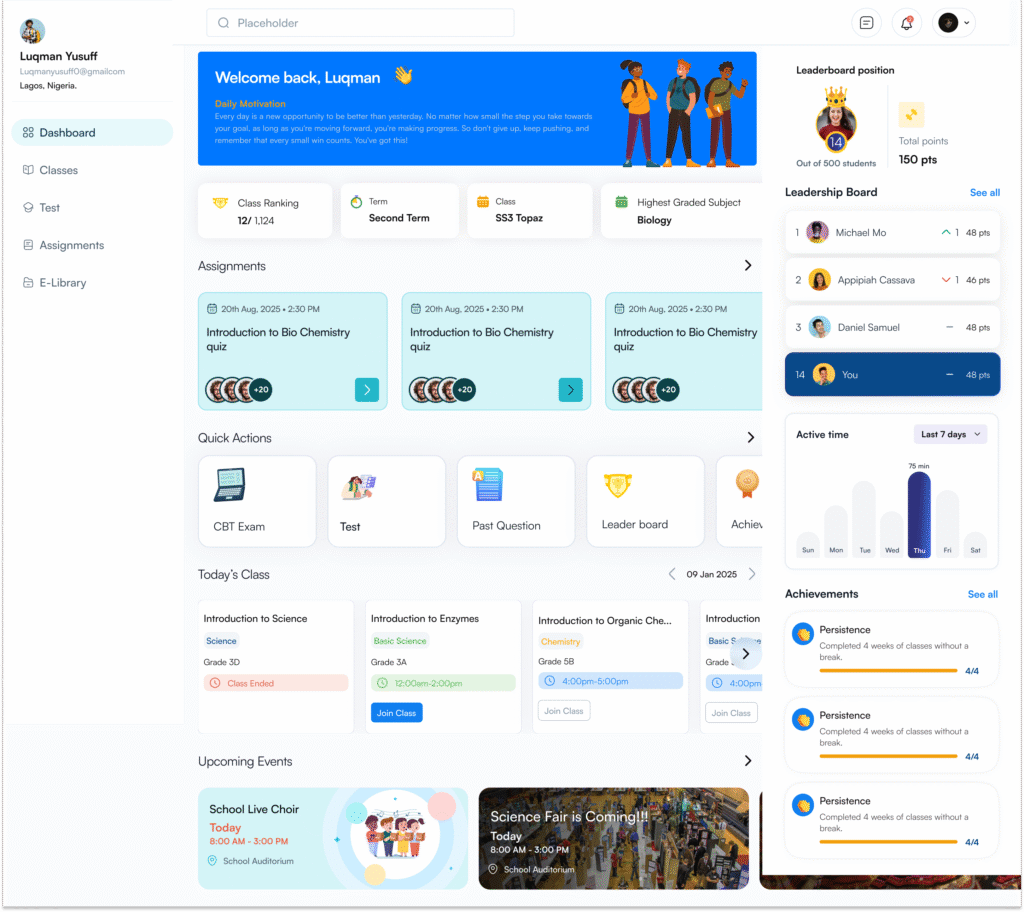
Scenario
- School: Bright Future Academy, Lagos
- Challenge: Administrators relied on paper records and multiple spreadsheets for student data, term exams, attendance, and continuous assessments. This led to errors, delays, and parent complaints, especially during exam periods.
- Goal: Streamline record management, reduce errors, improve parent communication, and save administrative time.
Implementation with ExcelMind
- Centralized Student Records
All student information, including admission forms, term exam results, class assessments, and attendance, was consolidated into ExcelMind. This eliminated fragmented data and allowed for consistent recordkeeping. - Digital Attendance and Assessment Tracking
Teachers updated attendance and assessment results in real-time, allowing administrators to monitor student participation and performance across all classes. - Parent Access and Communication
Parents were provided secure logins to view term reports, attendance, and assessment scores. Automated notifications informed parents when new data was available, reducing repetitive inquiries. - Staff Coordination
Teachers and administrative staff used ExcelMind to coordinate updates and avoid duplication. Clear permissions ensured data integrity and proper role-based access. - Reporting and Analytics
Administrators generated comprehensive reports on student performance, attendance trends, and term results, enabling data-driven decisions to support students effectively.
Outcome
- Time saved: Administrative staff reduced manual data consolidation by 60%
- Improved accuracy: Data entry errors were minimized due to standardized digital records
- Enhanced parent satisfaction: Parents could view results securely and instantly
- Better decision-making: School leaders could identify students needing extra support earlier
This case study demonstrates how ExcelMind empowers Nigerian schools to provide secure, organized, and efficient record management, improving operations and student engagement while reducing administrative burden.
See Also: WAEC 2026 Rules: 9 Costly Mistakes Schools Must Avoid
Conclusion
Efficient school record management is essential for Nigerian schools to operate smoothly, maintain accurate data, and enhance communication with students and parents. By implementing structured processes, schools reduce administrative errors, save time, and provide greater transparency.
ExcelMind empowers school owners to:
- Centralize student records for attendance, term exams, and assessments
- Track student performance in real-time across classes and terms
- Provide parents with secure access to student progress and notifications
- Generate automated reports to support data-driven decisions
- Coordinate staff efficiently, reducing duplication and errors
By adopting ExcelMind, schools can offer a reliable, secure, and organized system for managing records, improving operational efficiency, and enhancing parent and student satisfaction.
Book a demo with ExcelMind today and see how your school can manage student records efficiently while keeping parents and students informed.
https://www.excelmind.org